How to Rank Higher on Google Maps in 30 Days: 7 Proven Local SEO Steps
If you want to know how to rank higher on Google Maps, you need more than luck, ads, or shortcuts. The businesses that move up fast are the ones that improve their Google Business Profile, earn better reviews, build strong local citations, and stay consistent.
They’re the ones who understand that Google Maps ranking depends heavily on proximity, prominence, and relevance and that all three need to work together.
What You Can Realistically Expect in 30 Days
Look, I’m going to be blunt here. If you’re starting from zero – no Google Business Profile, terrible reviews, inconsistent NAP data across the web – you’re not going to magically appear at #1 in Charlotte for “restaurant near me” in 30 days.
But here’s what IS realistic: Moving from page 2 to the map pack. Going from position 8 to position 3 in local results. Getting your Google Business Profile to show up for branded searches when it wasn’t before.
The businesses that see the fastest Google Maps ranking improvements are the ones with solid fundamentals already in place. They have verified profiles, decent review counts, and consistent business information online. If that’s you, then yes – significant movement in 30 days is absolutely possible.
I worked with a Charlotte plumbing company last year who went from not showing up at all for “emergency plumber Charlotte” to position 2 in the map pack within 28 days. The secret wasn’t some fancy hack – it was systematic execution of the fundamentals.
Week 1: Google Business Profile Foundation Work
This first week is all about getting your Google Business Profile optimized properly. Most businesses think they’ve done this, but when I audit their profiles, I find glaring issues.
Complete Profile Optimization
Start by claiming and verifying your Google Business Profile if you haven’t already. Then verify every single field is filled out completely:
- Business name (exact match to your legal name or DBA)
- Complete address with suite numbers
- Phone number (local Charlotte number performs better than 800 numbers)
- Website URL
- Business hours including holiday hours
- Business description with natural keyword inclusion
- All relevant categories (primary and secondary)
- Attributes that apply to your business
Here’s what most people miss: Google wants to see consistency between your Google Business Profile and your actual website. If your homepage says “Charlotte’s Premier HVAC Service” but your Google description talks about “heating and cooling,” you’re sending mixed signals.
Photo Strategy
Upload at least 20 high-quality photos in the first week. I’m talking about real photos of your actual business, not stock images. Google can detect stock photos, and they don’t help your local ranking factors.
The photos that move the needle for local SEO boost are:
- Exterior storefront shots
- Interior workspace images
- Team photos (faces build trust)
- Products or services in action
- Before/after shots if applicable
That musty smell when you walk into an old retail space that hasn’t been updated in years? Don’t let your photos give off that same outdated vibe. Fresh, bright, professional photos signal to Google that you’re an active, legitimate business.
Week 2: Get More Google Reviews Strategically
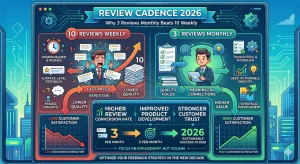
This is where most businesses either win or lose the Google Maps ranking game. Reviews aren’t just about quantity they’re also about knowing what makes a good Google review though you need volume. It’s about velocity, recency, and response rate.
The Review Velocity Factor
Google’s algorithm pays attention to how quickly you’re earning new reviews. A business that gets 3 reviews in one week looks more active than one that gets 12 reviews spread over 6 months.
I help my clients implement what I call the “Review Sprint” approach. Instead of randomly asking for reviews, we systematically reach out to recent customers over a concentrated period.
Here’s the system that works:
- Create a list of your last 30 customers
- Send personalized follow-up messages (not automated blasts)
- Include a direct link to your Google review page
- Follow up once if no response in 48 hours
- Track your response rate and optimize
Businesses that earn a steady burst of new Google reviews within a 14-day period often see faster visibility gains, especially when their profile is already well optimized.
I’ve watched this happen dozens of times. The key is making the ask specific and easy.
Review Response Strategy
Responding to reviews isn’t just good customer service – it’s a ranking factor. But most business owners do this wrong. They write generic “Thanks for the review!” responses that add no value.
I train my clients to write responses that include location-specific keywords naturally. Instead of “Thanks for choosing us!” try “Thanks for trusting us with your Charlotte home’s HVAC needs, Sarah!”
You should be responding to 100% of reviews – good and bad. especially if you want to respond to negative Google reviews the right way.
If your business is struggling to earn reviews consistently, you also need a system to get more Google reviews without sounding forced or desperate.
Week 3: Build Local Citations for Google Maps SEO
Now we’re getting into the technical stuff that most small business owners don’t want to deal with. But this is where the magic happens for Google Maps ranking.
Citations are mentions of your business name, address, and phone number (NAP) across the web. Google uses these to verify your business legitimacy and location authority.
Google also emphasizes the importance of keeping your business information accurate and consistent across the web.
Priority Citation Sources
Not all citations are created equal. Focus on these high-authority platforms first:
- Yelp (even if you hate it, you need to be there)
- Facebook Business Page
- Better Business Bureau
- YellowPages.com
- Foursquare
- Apple Maps (often overlooked but important)
The clicking noise you hear when manually entering NAP data into dozens of directories? That’s the sound of effective local SEO work. It’s tedious, but it works.
For Charlotte-specific businesses, also focus on local directories like:
- Charlotte.com business directory
- Charlotte Chamber of Commerce
- Charlotte Business Journal listings
- Neighborhood-specific directories (like South End, NoDa, etc.)
NAP Consistency Audit
Here’s where most businesses lose the game before they even start playing. Your business name, address, and phone number must be EXACTLY the same across every single platform.
Not “Charlotte HVAC” on Google and “Charlotte Heating & Air” on Yelp. Not “123 Main St.” on your website and “123 Main Street” everywhere else. Google’s algorithm treats these as different businesses.
I use tools like Bright Local or White spark to audit NAP consistency, but you can do a manual check by searching “[your business name] [your city]” and seeing what comes up.
Week 4: Refine Your Google Maps Optimization
The final week is about fine-tuning everything you’ve built and monitoring your progress. This is when most businesses start seeing real movement in their Google Maps rankings.
Keyword Optimization in Posts
Google Business Profile posts are underutilized by most businesses, but they’re powerful for local ranking. I have my clients publish 2-3 posts per week with location-specific keywords woven in naturally.
Instead of “We install air conditioners,” try “Installing energy-efficient AC units throughout Charlotte’s Myers Park and Dilworth neighborhoods this week.” See the difference?
Posts that mention specific Charlotte neighborhoods, landmarks, or local events tend to perform better for “near me” searches.
Q&A Section Optimization
Most business owners don’t even know about the Q&A section in their Google Business Profile. This is where customers can ask questions and you can provide answers – all of which are indexed by Google.
Proactively add questions that include your target keywords:
- “Do you serve the South End area of Charlotte?”
- “What’s your average response time for emergency calls?”
- “Do you offer financing options?”
Answer these questions thoroughly with location-specific details. This section becomes searchable content that helps your local SEO boost efforts.
Charlotte Google Maps SEO Tactics That Actually Work
Every market has its quirks, and Charlotte is no different. After working with hundreds of Queen City businesses, I’ve noticed patterns that work specifically here.
Neighborhood Targeting
Charlotte is really a collection of distinct neighborhoods, each with its own character and search behavior. People in Myers Park search differently than people in NoDa or University City.
Instead of trying to rank for the broad term “Charlotte restaurant,” focus on neighborhood-specific keywords:
- “South End brunch spot”
- “Uptown Charlotte happy hour”
- “Dilworth family restaurant”
- “Plaza Midwood coffee shop”
Businesses that optimize for specific Charlotte neighborhoods often outrank those trying to capture the entire metro area. The competition is less fierce, and the intent is more specific.
Banking District Advantage
If you’re a B2B service provider in Charlotte, you have a unique advantage. The banking district (Uptown) generates massive search volume for professional services during business hours.
Optimize for searches like:
- “business lawyer near Bank of America”
- “accountant uptown Charlotte”
- “IT support banking district”
These searches have high commercial intent and less competition than broader terms.
How to Measure Google Maps Ranking Progress
You can’t manage what you don’t measure. Here’s how I track Google Maps ranking improvements for my clients:
Key Metrics to Watch
Don’t get caught up in vanity metrics. Focus on the numbers that actually matter:
- Map pack ranking positions for your target keywords
- Google Business Profile views (found in your Google Business Profile insights)
- Direction requests and phone calls from Google
- Website clicks from your Google listing
- Review velocity (new reviews per week)
I use BrightLocal’s Local Search Results Checker to track rankings, but you can manually check by searching your target keywords in incognito mode from different locations around Charlotte.
The 72-Hour Rule
Here’s something most people don’t realize: Google Maps rankings can fluctuate dramatically in the first 72 hours after making changes to your profile. Don’t panic if you see drops immediately after optimization.
Real ranking improvements typically stabilize after 2-3 weeks. The businesses that make hasty changes based on daily fluctuations often hurt their long-term progress.
| Week | Expected Progress | Key Actions |
|---|---|---|
| 1 | Profile completion | Optimize all fields, upload photos |
| 2 | Review acceleration | Earn 8-12 new reviews |
| 3 | Citation building | List in 15+ directories |
| 4 | Ranking movement | Monitor and refine |
Real Results I’ve Delivered
I worked with a Charlotte auto repair shop that came to me frustrated after spending $3,000 on Google Ads with minimal results. They were barely showing up in map searches for “auto repair Charlotte” despite being in business for 15 years.
Here’s what we discovered in the audit: Their Google Business Profile was only 60% complete, they had 8 total reviews (most over a year old), and their NAP data was inconsistent across 12 different directories.
The 30-day results:
- Moved from not ranking to position 3 for “auto repair near me”
- Increased Google Business Profile views by 340%
- Generated 23 new reviews with an average rating of 4.8 stars
- Phone calls from Google increased by 180%
The owner called me on day 28 saying he had to hire an additional mechanic because of the increased demand. That’s the power of proper Google Maps optimization.
Another client – a Charlotte dental practice in the competitive Ballantyne area – saw similar results. They went from position 12 for “dentist Ballantyne” to position 2 in the map pack within 35 days. The key was focusing on their Google Business Profile optimization and systematically building citations in healthcare-specific directories.
Frequently Asked Questions
What factors help a business rank higher on Google Maps?
Great question. The three main factors are proximity (how close you are to the searcher), prominence (how well-known your business is), and relevance (how well your listing matches the search). But here’s what most people miss – consistency across all your online listings is the foundation everything else builds on.
How important are reviews for Google Maps rankings?
Reviews are critical, but it’s not just about quantity. I’ve seen businesses with 50 recent reviews outrank competitors with 200 old reviews. Google looks at review velocity, recency, and your response rate. A business earning 2-3 reviews per week consistently will typically outrank one that got a bunch of reviews two years ago.
Can local businesses improve Google Maps visibility in 30 days?
Absolutely, but it depends on your starting point. If you already have a claimed Google Business Profile with decent fundamentals, you can see significant improvement in 30 days. If you’re starting from scratch with no online presence, 30 days gets you set up properly but real ranking movement might take 45-60 days.
Does responding to reviews help Google Maps SEO?
Yes, but not in the way most people think. Google doesn’t directly use review responses as a ranking factor, but businesses that respond to reviews tend to get more reviews, better ratings, and higher engagement – all of which DO impact rankings. Plus, responding shows Google you’re actively managing your business.
How do “near me” searches impact Google Maps rankings?
“Near me” searches are huge for local businesses – they make up about 60% of all local searches. Google uses the searcher’s location to determine proximity, but here’s the insider tip: businesses that mention specific neighborhoods and local landmarks in their profiles and posts often capture “near me” traffic from broader areas.
Key Takeaways
Look, ranking higher on Google Maps isn’t rocket science, but it does require systematic execution. Most businesses fail because they try to do everything at once or focus on the wrong metrics.
Here’s your action plan for the next 30 days:
- Week 1: Complete your Google Business Profile optimization – every field, 20+ photos, accurate categories
- Week 2: Execute a review sprint to earn 8-12 new reviews with personalized outreach
- Week 3: Build consistent citations across 15+ high-authority directories
- Week 4: Fine-tune with posts, Q&A optimization, and progress monitoring
The businesses that see the biggest improvements are the ones that treat this as a systematic process, not a one-time project. Google Maps ranking is about building authority and trust over time.
If you’re in Charlotte and want someone who’s actually done this hundreds of times to handle it for you, that’s exactly what we do at Mr Rated. I’m Google Certified and I’ve been helping local businesses dominate their Google Maps rankings since before most people knew what local SEO even was.
Ready to stop watching your competitors show up ahead of you in map searches? Get in Touch Now! at (980) 333-3770.