Google Maps Marketing Guide for Charlotte Small Businesses
Look, I’m going to be blunt here – if you’re running a small business in Charlotte and not focusing on Google Maps marketing, you’re handing customers to your competitors on a silver platter.
I’ve been working with local businesses for over 15 years as a Google Certified expert, and I see the same pattern repeatedly. Business owners think having a website is enough. It’s not. When someone searches for “coffee shop near me” or “best mechanic in South End,” they’re not looking at your beautiful website – they’re looking at that map pack at the top of Google results.
Here’s what most people miss: Google Maps marketing isn’t just about being found – it’s about being chosen. That little snippet of information in your Google Business Profile is often the first and last impression a potential customer has of your business.
Why Google Maps Marketing Dominates Local Search
The truth is, local search behavior has completely shifted. I worked with a South Park restaurant owner last year who was getting zero foot traffic despite being on a busy street. Turns out, his Google Business Profile was a mess – wrong hours, no photos, and just three reviews from 2019.
Within 60 days of fixing his profile and implementing a proper review strategy, his weekend reservations increased by 180%. That’s not luck – that’s understanding how local search actually works.
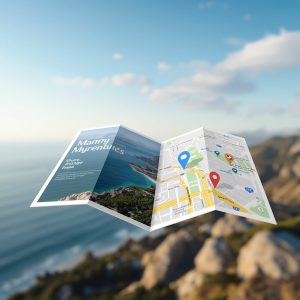
The local pack (those top three businesses that show up with map pins) gets roughly 60% of all clicks for local searches. If you’re not in that pack, you’re invisible to most potential customers.
But here’s the kicker – showing up isn’t enough. I’ve seen businesses rank #1 in the local pack and still lose customers to the #3 spot because their competitor had better photos, more recent reviews, and complete business information.
Optimizing Your Google Business Profile: The Foundation
Your Google Business Profile is your digital storefront. Most Charlotte business owners treat it like an afterthought, and it shows. I audit profiles daily, and honestly, about 70% of them are missing critical information that Google uses for ranking.
Here’s what actually moves the needle:
Business Information Completeness
Google rewards profiles that are 100% complete. I’m talking about every single field filled out – business description, services, attributes, hours (including holiday hours), phone number, website, and categories.
That musty smell when you walk into a business that hasn’t updated their Google hours in months? That’s what happens when customers show up to a closed store because your profile said you were open. Google tracks this user behavior and punishes profiles that provide inaccurate information.
Photo Strategy That Converts
Most businesses upload three blurry photos and call it done. Big mistake. Your Google Business Profile should have at least 15-20 high-quality photos covering:
- Exterior shots (multiple angles)
- Interior shots showing your space
- Team photos (builds trust)
- Products or services in action
- Behind-the-scenes content
I tell my clients to think like their customers. When someone’s deciding between your Dilworth boutique and the one in Myers Park, what do they want to see? Show them exactly what they’ll experience.
Building a Review Collection Strategy That Actually Works
This is where most small businesses completely fall apart. They either ignore reviews entirely or use some spammy automated system that gets them penalized.
Real talk: Review velocity matters more than total review count. A business with 50 reviews that gets 3-4 new ones every month will outrank a business with 200 reviews but none in the past six months.
Here’s the system I use with my Charlotte clients:
The 48-Hour Review Request Window
You’ve got a narrow window after a positive customer experience to request a review. Wait a week, and you’ve lost them. I teach my clients to ask for reviews within 48 hours using a three-touch sequence:
- Immediate follow-up (same day or next day)
- Gentle reminder after 3 days
- Final request after one week
The key is making it stupid-simple. Don’t send them to your website to hunt for a review link. Send them directly to your Google Business Profile review section with a shortened URL.
Response Strategy for Negative Reviews
Here’s an unpopular opinion: One or two negative reviews actually help your credibility. All 5-star ratings look fake. But how you respond to negative feedback determines whether it hurts or helps your business.
I coached a Ballantyne plumber through responding to a scathing 1-star review about a failed water heater repair. Instead of getting defensive, he acknowledged the customer’s frustration, explained what went wrong, and described the steps he’d taken to prevent it from happening again. Three potential customers mentioned that review response when they called to hire him.
Cracking the Local Pack Algorithm
Google’s local ranking algorithm considers three main factors: relevance, distance, and prominence. Most business owners obsess over the wrong signals and wonder why they’re stuck on page two.
Proximity Still Trumps Everything
If someone in Uptown Charlotte searches for “pizza delivery,” Google prioritizes businesses within a few miles over businesses with better reviews but located in Concord. You can’t change your location, but you can optimize for the specific neighborhoods you serve.
I help businesses create neighborhood-specific pages and service area optimization. A Myers Park dermatologist shouldn’t just target “Charlotte dermatologist” – they should also optimize for “Myers Park skin doctor,” “Dilworth dermatology,” and “South End skincare.”
Citation Consistency Across Directories
This is where I see Charlotte businesses shoot themselves in the foot constantly. They’ll have “Johnson’s Auto Repair” on Google, “Johnson Auto” on Yelp, and “Johnson’s Car Service” on their website.
Google gets confused by inconsistent business names, addresses, and phone numbers (NAP data). Pick one version and use it everywhere – Yellow Pages, Better Business Bureau, industry directories, social media profiles. Everywhere.
NAP Consistency: The Foundation of Local SEO
NAP consistency sounds boring, but it’s the foundation everything else is built on. I’ve seen businesses lose 50% of their local visibility because they moved locations and left old addresses scattered across 20 different directories.
Here’s my NAP audit process:
- Google your business name + Charlotte to see what comes up
- Check major directories: Google, Yelp, Facebook, Yellow Pages, Bing Places
- Look for industry-specific directories (for restaurants: OpenTable, Zomato; for contractors: Angie’s List, HomeAdvisor)
- Document every variation you find
- Update them one by one
This process takes time, but it’s crucial. I worked with a Southpark orthodontist who was showing up in three different locations on Google Maps because of inconsistent addresses. Patients were driving to his old office and getting frustrated.
Common Google Maps Marketing Mistakes That Kill Rankings
After 15 years in this business, I’ve seen every mistake possible. Here are the ones that hurt Charlotte businesses the most:
Keyword Stuffing in Business Names
Stop it. “Mike’s Best Emergency Plumbing Services Charlotte NC” isn’t clever – it’s a violation of Google’s guidelines. Use your actual business name. Let your categories and description handle the keywords.
I’ve seen businesses get suspended from Google entirely for this. The temporary ranking boost isn’t worth losing your entire online presence.
Buying Fake Reviews
Google’s review detection algorithms are sophisticated. They can identify purchased reviews, reviews from the same IP address, and unnatural review patterns. The penalties are severe – complete removal from local search results.
That clicking noise a failing Google Business Profile makes before it gets suspended? It’s usually preceded by a suspicious spike in 5-star reviews from accounts with no other review history.
Ignoring Google Posts
Google Posts are like mini social media updates that appear in your Business Profile. Most businesses ignore them completely. Big mistake. Regular posting signals to Google that your business is active and engaged.
I recommend posting at least twice per week – special offers, new products, company updates, industry tips. Keep them under 300 words and always include a call-to-action.
According to Local Search Association data, businesses that post regularly see 15% more engagement on their profiles – Local Search Association
Measuring Your Google Maps Marketing Success
You can’t improve what you don’t measure. Google provides detailed insights about how customers find and interact with your business profile, but most owners never look at them.
Key metrics I track for my Charlotte clients:
- Search impressions (how often you appear in search results)
- Profile views (how many people click to see your full profile)
- Website clicks (direct traffic from your profile)
- Direction requests (people looking for driving directions)
- Phone calls generated from your profile
The goal isn’t just more impressions – it’s more conversions. I’d rather have 100 targeted profile views that generate 10 phone calls than 1,000 random impressions that generate nothing.
One of my Noda coffee shop clients was getting tons of profile views but few customers. Turned out their photos made the space look cramped and unwelcoming. We updated the photos to show the cozy atmosphere and comfortable seating areas. Direction requests increased by 40% within a month.
Advanced Google Maps Marketing Strategies
Once you’ve mastered the basics, there are advanced techniques that can give you an edge over competitors who are just going through the motions.
Geo-Targeted Landing Pages
Create specific landing pages for different Charlotte neighborhoods you serve. Don’t just have a generic “Charlotte plumber” page – create separate pages for “Uptown Charlotte plumbing services,” “South End emergency plumber,” and “Ballantyne residential plumbing.”
Each page should include neighborhood-specific information, local landmarks, and testimonials from customers in that area. This neighborhood-focused approach helps you compete more effectively in local search results.
Review Response Templates That Convert
Most businesses either don’t respond to reviews or use generic responses that sound robotic. I develop custom response templates for my clients that address common themes while maintaining their brand voice.
For positive reviews, thank the customer specifically for what they mentioned and invite them back. For negative reviews, acknowledge the issue, apologize sincerely, and offer to resolve it offline. Always end with your contact information.
Proper review management turns your review section into a sales tool rather than just a feedback collection.
Real Results We’ve Delivered
I worked with a family-owned Charlotte HVAC company that was struggling to compete against the big corporate franchises. They had great service but terrible online visibility.
When they came to me through Mr Rated, they were ranking #8 in local search results and getting maybe 2-3 calls per week from Google. Their Google Business Profile was a disaster – outdated photos, inconsistent business hours, and only 12 reviews (most over a year old).
Here’s what we implemented:
- Complete Google Business Profile optimization with professional photos
- Systematic review collection strategy targeting recent customers
- NAP consistency cleanup across 15 local directories
- Weekly Google Posts highlighting seasonal maintenance tips
- Neighborhood-specific landing pages for Ballantyne, Myers Park, and Dilworth
Results after 90 days:
- Jumped from #8 to #2 in local pack results
- Increased from 12 to 47 Google reviews (all authentic)
- Website traffic from Google Maps increased 220%
- Phone calls from Google Business Profile went from 2-3 per week to 15-20
- Booked over $45,000 in new HVAC installations directly attributable to improved local visibility
The owner told me that the phone started ringing so much they had to hire an additional office assistant. That scratchy feel of success when a local business finally breaks through the noise? That’s what proper Google Maps marketing delivers.
Want similar results for your Charlotte business? Let’s discuss your specific situation and create a custom strategy that works for your industry and location.
Frequently Asked Questions
What is Google Maps marketing for local businesses?
Great question. Google Maps marketing is the process of optimizing your business’s presence on Google Maps and in local search results to attract nearby customers. It includes optimizing your Google Business Profile, collecting authentic reviews, maintaining consistent business information across directories, and implementing strategies to appear in the local pack (those top three businesses with map pins).
Think of it as making sure your business shows up when someone searches “restaurants near me” or “plumber in Charlotte.” It’s different from regular SEO because it focuses specifically on location-based searches and local customer behavior.
How does Google Maps help customers find businesses near me?
Google Maps uses several signals to determine which businesses to show for local searches. The main factors are proximity (how close you are to the searcher), relevance (how well your business matches what they’re looking for), and prominence (how well-known and trusted your business appears online).
When someone searches for “coffee shop near me,” Google looks at their location, finds coffee shops within a reasonable distance, then ranks them based on factors like reviews, profile completeness, and overall online reputation. The businesses that appear in the local pack (top three results) get the majority of clicks and customers.
What role do reviews play in Google Maps marketing?
Reviews are crucial for Google Maps marketing success. They serve as both a ranking factor and a conversion tool. Google considers the number of reviews, review frequency, and overall rating when deciding which businesses to show in local results.
But here’s what most businesses miss – review velocity matters more than total count. A business with 30 recent reviews will often outrank a business with 100 old reviews. Plus, customers read reviews to decide between businesses. A thoughtful response to a negative review can actually convince someone to choose your business over a competitor with all 5-star ratings.
How often should a business update its Google Business Profile?
You should update your Google Business Profile at least weekly, but ideally more often. I recommend posting Google Posts twice per week, adding new photos monthly, and updating business information immediately whenever anything changes.
Google rewards active profiles with better visibility. If your profile hasn’t been updated in months, Google assumes you’re not actively managing your business and may show competitors instead. Regular updates signal that you’re engaged with your online presence and likely providing current, accurate information to customers.
Is Google Maps marketing effective for small businesses in Charlotte?
Absolutely. In fact, Google Maps marketing is often more effective for small businesses than traditional advertising because it targets people who are actively looking for what you offer right now. Charlotte has a competitive local market, which makes proper optimization even more important.
I’ve seen Charlotte small businesses increase their customer calls by 200-300% just by optimizing their Google Business Profile and implementing a review strategy. The key is consistency and understanding that local SEO is a marathon, not a sprint. Results typically start showing within 60-90 days of proper implementation.
Ready to Dominate Google Maps in Charlotte?
Look, Google Maps marketing isn’t optional anymore – it’s survival. While your competitors are still figuring out the basics, you can be building a systematic approach that generates consistent local customers.
Here’s what to do next:
- Audit your current Google Business Profile – Check every field for completeness and accuracy
- Implement a review collection system – Start asking satisfied customers for reviews within 48 hours
- Clean up your NAP consistency – Make sure your business name, address, and phone are identical everywhere online
- Create a content calendar – Plan Google Posts and photo updates for the next 90 days
The businesses that succeed with Google Maps marketing are the ones that treat it as an ongoing strategy, not a one-time setup. That’s where Mr Rated comes in – we don’t just optimize your profile and disappear. We monitor, adjust, and improve your local presence continuously.
As a Google Certified expert who’s helped dozens of Charlotte businesses transform their local visibility, I can tell you that the opportunity is enormous right now. Most of your competitors are still doing this wrong.
Ready to get started? Get in Touch Now! at (980) 333-3770 and let’s discuss how to make your Charlotte business the obvious choice for local customers searching on Google Maps.